Siriraj Hospital’s Faculty of Medicine reports that about 70–90% of Thai adults with allergies are allergic to dust mites, and the room with the most mites in any home is the bedroom. Mites feed on the skin flakes we shed and love warm, damp places like mattresses, pillows and blankets.
A dust mite vacuum helps, but if the room is still full of carpets, soft toys and fabrics that are hard to wash, the mites come back fast. This guide sets up the bedroom one area at a time, following advice from ThaiHealth (สสส.) and Thai hospitals, and flags the methods that do less than most people think.
In short
- Wash sheets, pillowcases and duvet covers at 55–60°C every 1–2 weeks
- Encase the mattress and pillows in tightly woven mite-proof covers
- Take carpets, plush toys and fabric-covered furniture out of the bedroom
- Keep humidity below 50%: mites struggle in dry air
Where dust mites live in the bedroom
Dust mites are too small to see and do not stay in the air for long. Most of the allergen comes from their droppings and bodies, which build up in fabrics and dust in these places:
Mattressthe biggest mite population: warmth, moisture from sweat and skin flakes every night
Pillows, blanketsright next to your nose all night, so they matter most for symptoms
Carpets, curtains, toysfabrics that are hard to wash and rarely washed let mites build up
Humidity is why Thailand has so many mites. Mites do not drink; they absorb moisture from the air. A University of Kentucky fact sheet explains that below about 50% relative humidity they lose water and cannot survive, while Bangkok’s humidity reaches around 80% in the rainy season.
Set up the bedroom, one area at a time
The mattress
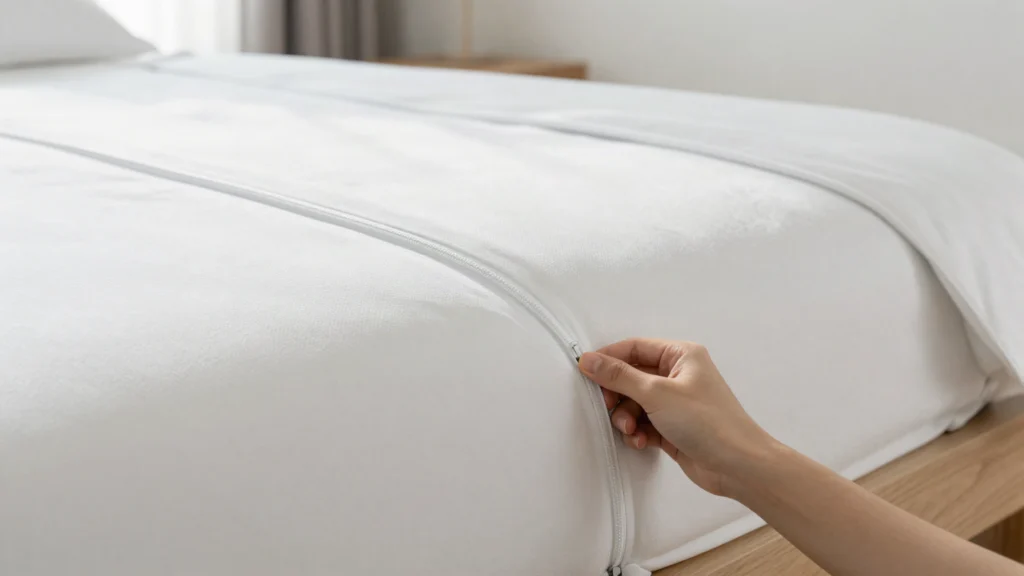
- Encase the mattress in a mite-proof cover. ThaiHealth recommends fabric woven tightly enough that mites and droppings cannot pass, or plastic or vinyl covers
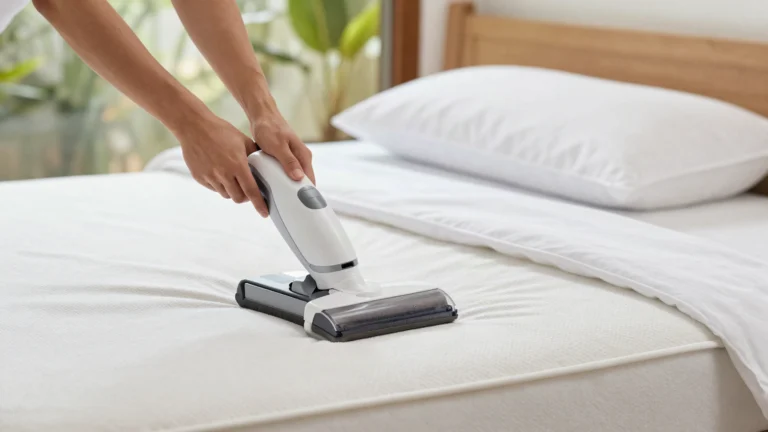
- Vacuum the mattress surface at least weekly, 2–3 times a week in the rainy season, focusing on seams and edges
- Flip the mattress monthly and vacuum the other side
- Air it in strong sun if you can lift it: ThaiHealth suggests 3 hours or more, but treat it as an extra
Pillows, blankets and sheets
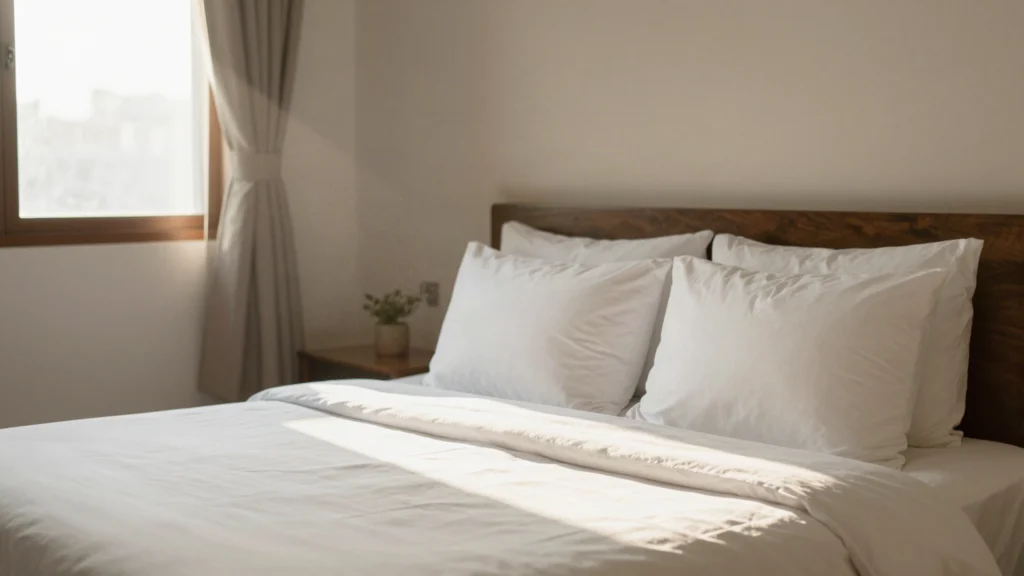
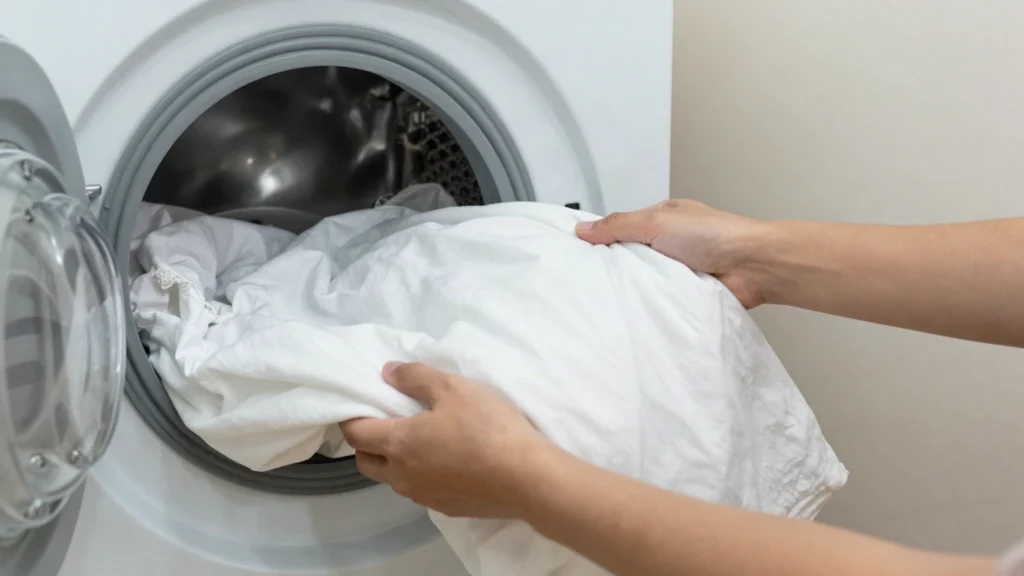
- Wash sheets, pillowcases and duvet covers every 1–2 weeks at 55–60°C. Research found that 60°C water kills all mites, while most survive at 40°C
- If your washing machine has no hot cycle, use a laundry with a hot programme for bedding
- Put a mite-proof cover under the normal pillowcase
- Choose pillows and blankets that can be washed whole; they are much easier to keep clean than ones where only the cover washes
The floor
- No carpets in the bedroom: hard floors like tile or wood are far easier to keep clean
- Wipe floors and surfaces with a damp cloth instead of sweeping, which stirs dust up
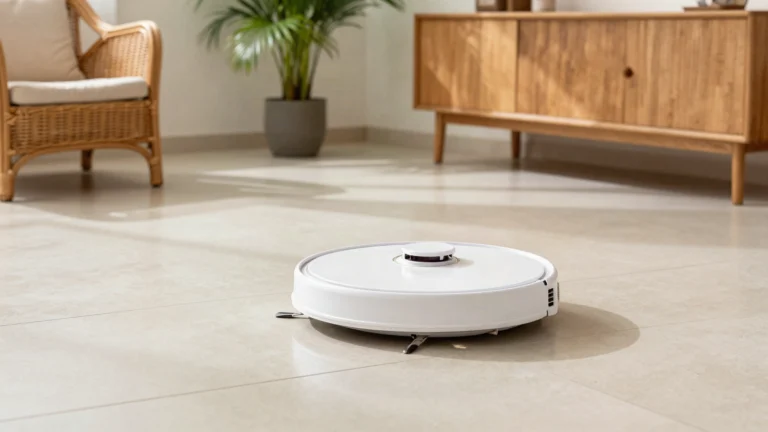
- If you vacuum, use a machine with a HEPA filter and empty the bin outside the bedroom
Curtains, furniture and soft toys
- ThaiHealth advises against fabric-covered furniture and curtains in the bedroom. If you want curtains, choose ones that come off easily and wash them regularly
- Keep plush toys out of the bedroom. For a toy a child must sleep with, wash it at 55–60°C or put it in a bag in the freezer to kill the mites
- Store clothes and things you are not using in closed cupboards, not in piles that collect dust
Pets
ThaiHealth advises keeping pets out of the bedroom, because their dander feeds dust mites and pet hair is an allergen in its own right.
Humidity and ventilation
- Aim for bedroom humidity below 50%. A digital hygrometer shows you the real figure for your room
- Running the air-con pulls moisture out of the air; for rooms that get very damp in the rainy season, a dehumidifier is more targeted
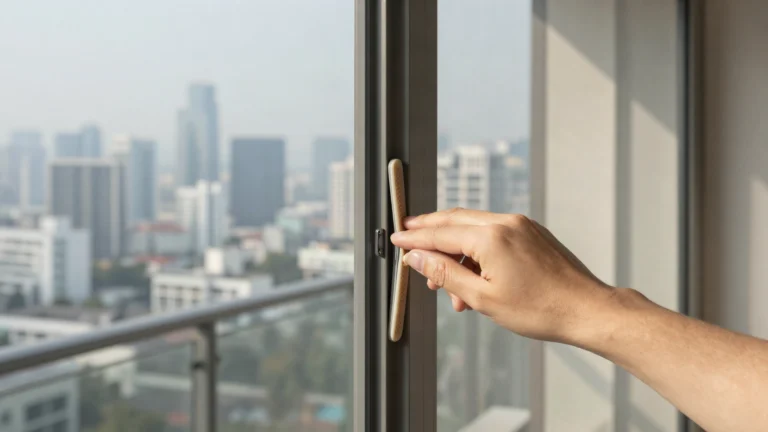
- ThaiHealth recommends opening the bedroom door and windows for at least an hour a day, but during high PM2.5 periods choose a time when the dust level is low. See how to check the dust level before opening the windows
Bedroom checklist for dust mite allergies
| Area | Do | Avoid |
|---|---|---|
| Mattress | mite-proof cover, vacuum weekly | an old mattress that is never cleaned |
| Pillows, blankets | hot wash at 55–60°C every 1–2 weeks | cold washes only |
| Floor | hard floor, damp-cloth cleaning | carpets, dry sweeping |
| Curtains, furniture | washable, or no fabric | fabric sofas, heavy curtains that are never washed |
| Toys | hot wash or freeze, store outside the bedroom | plush toys on the bed |
| Air | humidity below 50%, ventilate when the dust level is low | a closed, damp room all rainy season |
What helps less than you think
Sun-drying instead of a hot wash
Sunlight lowers the moisture in mattresses and pillows, but Samitivej Thonburi Hospital explains that the sun usually does not get hot enough to kill all the mites. Use it as an extra, not as the main method.
The UV light in dust mite vacuums
A 2012 study found UV-C had to shine for 60 minutes at 10 cm to kill all adult mites, while a dust mite vacuum passes over each spot for a few seconds. What really works in the machine is beating and suction. Details in Does UV light really kill dust mites?
Vacuuming alone
A New Zealand study found that vacuuming mattresses daily for 8 weeks cut mite allergen by about 85%, but a Mahidol University dormitory study still found plenty of allergen left. Vacuuming works best combined with hot washing and mite-proof covers.
If your symptoms do not improve after setting up the room, see a doctor to test what you are allergic to. Similar symptoms can come from other allergens such as pets, mould or outdoor dust.
Choosing a dust mite vacuum?
We compared 7 models sold in Thailand from ฿799, looking at suction, beating and hot air. Our number one pick is the Xiaomi Dust Mite Vacuum Cleaner. Read more in Best dust mite vacuums in Thailand 2026.
Frequently asked questions
How often should I wash my sheets if I am allergic to dust mites?
Every 1–2 weeks at 55–60°C, as ThaiHealth recommends. 60°C kills all mites; a cold wash removes some allergen but most mites survive.
Are mite-proof mattress covers necessary?
They help a lot if you are allergic, because mites inside the mattress and pillow filling cannot be washed out. A tightly woven cover stops mites and droppings from reaching your skin.
What humidity should my bedroom be?
Below 50%. Mites absorb moisture from the air to live, and in air drier than that they lose water and cannot survive.
Do I have to throw away my child’s soft toys?
No. ThaiHealth advises washing them at 55–60°C or freezing them to kill the mites, and keeping them off the bed and out of the bedroom.