On heavy-dust days many people close the windows and assume they are safe. But PM2.5 is small enough to slip through gaps around doors, windows and vents, and homes make their own dust too, from incense and mosquito coils to frying.
Start with the bedroom, the room you spend the longest unbroken stretch in each day. This guide brings together 8 ways to cut dust in the bedroom, from free habits to things worth paying for, and points out which popular ideas do less than people think.
In short
- Check Air4Thai every morning. On orange or red days, close the windows and run the purifier
- An air purifier only works when its CADR fits the room and the doors and windows are shut
- Cut indoor sources: incense, candles, mosquito coils, cigarettes and smoke from frying or grilling
- Houseplants do not clean the air in any way you could measure in a real home
Start by reading the dust level
Thailand lowered its 24-hour PM2.5 standard to 37.5 µg/m³ on 1 June 2023 (previously 50). The World Health Organization recommends 15 µg/m³. Hourly readings for your area are on the Air4Thai website and app from the Pollution Control Department.
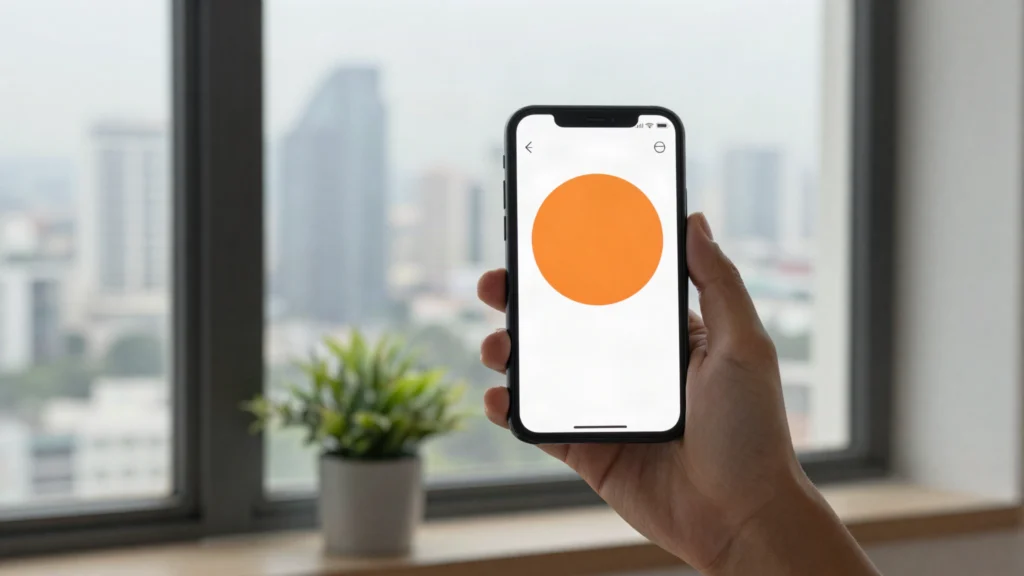
The Pollution Control Department splits PM2.5 into 5 colours. We turned them into what to do in the bedroom:
| Colour | PM2.5 (µg/m³) | What to do in the bedroom |
|---|---|---|
| Blue | 0–15 | open the windows and air the room fully |
| Green | 15.1–25 | windows can be open; close them as the level rises |
| Yellow | 25.1–37.5 | open the windows only briefly; if anyone at home has allergies or asthma, close them and run the purifier |
| Orange | 37.6–75 | keep the windows shut and the purifier running whenever you are in the room |
| Red | 75.1 and above | seal the room as well as you can, run the purifier faster and avoid making smoke indoors |
1. Close the windows on bad days and seal the gaps
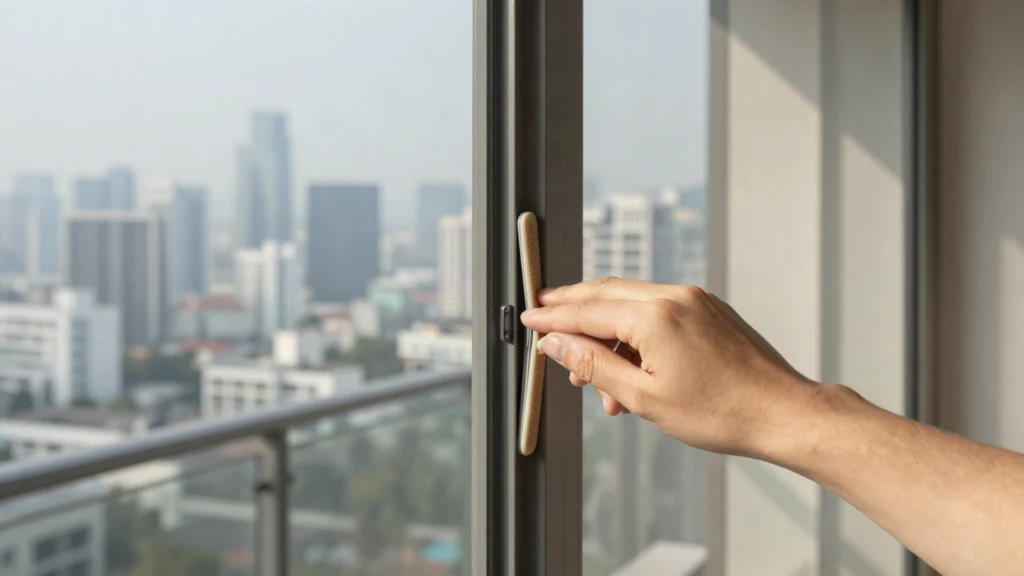
On orange or red days the outside air is the biggest source of dust. Close the bedroom windows and door, then check the gap under the door and the edges of sliding windows, which are where most air leaks in. Rubber or foam draught strips for doors and windows help close those gaps.
When the level is back to blue or green, open the windows to air the room. Keeping it shut all the time builds up humidity, odours and carbon dioxide.
2. Use an air purifier sized for the room
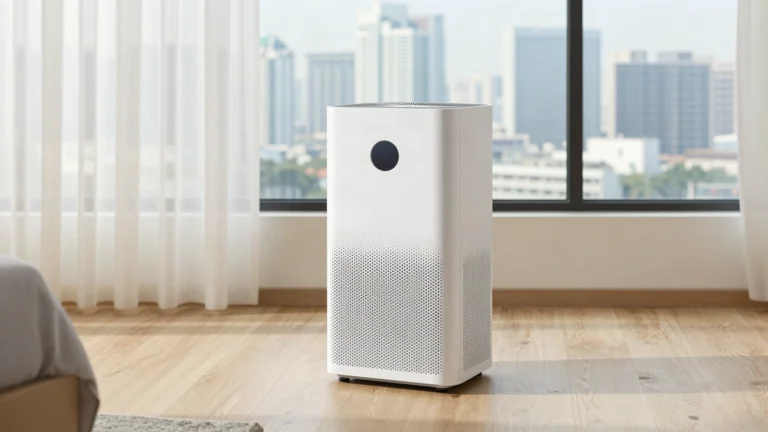
A purifier with a high-efficiency filter is the most effective way to cut PM2.5 in a room, but choose it by CADR, not the m² printed on the box. The easy rule: CADR in m³/h should be about 12 times the floor area. A 16 m² condo bedroom needs a CADR of about 200 m³/h or more.
Thailand’s Department of Health advises keeping the purifier away from the wall, not under the air-con or against the headboard, and keeping doors and windows shut while it runs. Switch it on a while before bed and leave it in auto mode overnight.
We compared 7 air purifiers sold in Thailand by CADR, yearly filter cost and electricity in Best air purifiers in Thailand 2026, which also has a CADR-by-room-size table.
3. Keep the air-con on recirculate and clean its filter
Most home split air-cons cool the air already in the room and blow it back; they do not pull air in from outside. Closing the windows and running the air-con on bad days keeps you comfortable without letting outside dust in.
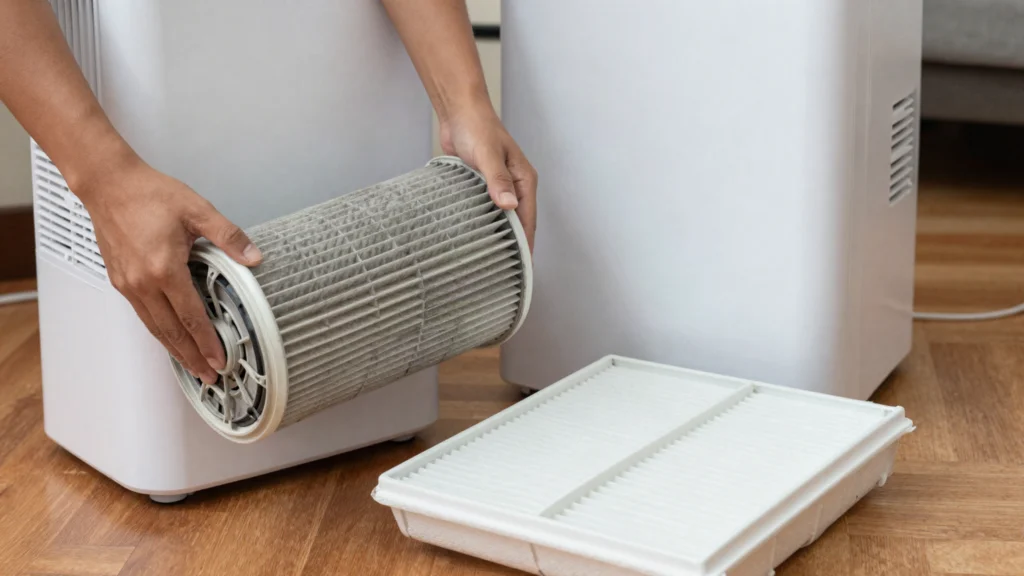
But an air-con filter is a coarse mesh for large dust, not designed for PM2.5, so it cannot replace a purifier. A clogged filter also weakens the airflow and makes the unit work harder, so clean it as often as your air-con manual says.
4. Cut the dust made inside your home
Anything that burns makes fine particles. On days when the outdoor level is already high, indoor smoke adds to the dust in the room. Stop or move these out of the bedroom:
- incense, scented candles and mosquito coils
- smoking indoors, including on balconies where smoke drifts back in
- frying, stir-frying on high heat or grilling in a closed room; if you must, run the cooker hood and close the kitchen door
5. Wipe with a damp cloth instead of sweeping
A broom kicks settled dust back into the air. Use a damp cloth on the floor, window ledges and surfaces in the bedroom instead. If you vacuum, use a machine with a fine filter and empty the bin outside the room.
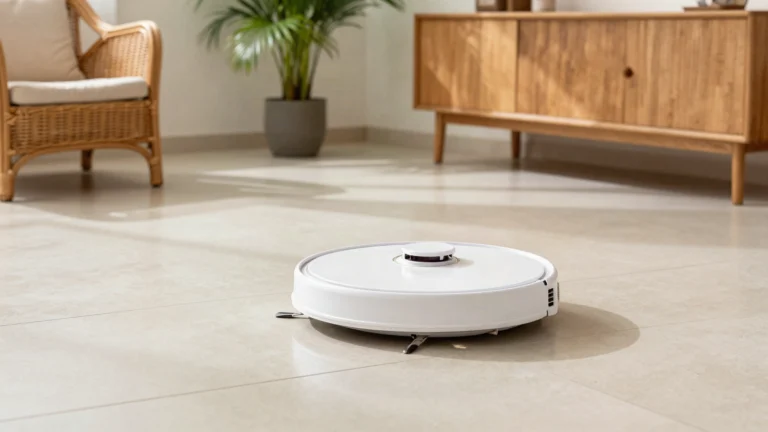
If you do not have time to mop often, a robot vacuum and mop can pick up floor dust every day. See the 8 robot vacuums that suit Thai homes.
6. DIY box-fan purifiers: how well do they work?
The DIY purifier known as the Corsi-Rosenthal box is a box fan with air filters fixed around it. The US Environmental Protection Agency (EPA) tested versions and found that one with four 1-inch MERV 13 filters and a cardboard shroud had the highest CADR for smoke of the designs it tested, about 3.6 times that of a fan with a single filter.
The EPA lists three limits:
- with dirty filters the box barely works, so change filters often during heavy dust
- use a recent fan with a safety certification mark and follow the fan’s manual, for example no extension cords
- do not leave older fans running unattended or while you sleep
In short, it is a temporary option that really works if built properly, but it is big and noisy and you handle the safety yourself. For a bedroom that runs all night, a ready-made purifier is more practical.
7. Air-purifying plants: far less help than you think
A review by Cummings and Waring (Drexel University, 2019) gathered 12 sealed-chamber experiments and calculated that you would need about 10 to 1,000 potted plants per square metre to clean the air as much as a building’s normal ventilation. The authors concluded that potted plants are not a practical way to clean indoor air.
The study looked at removing volatile compounds (VOCs), not PM2.5 directly, but the point about scale applies to dust too. Plants make a room nicer; do not count on them instead of a purifier.
8. Watch out for machines that emit ozone
Some devices are sold as air purifiers but work by releasing ozone. The US EPA says ozone harms the lungs, and at levels within public health limits it does very little to remove air pollutants. If a model you like has an ion or plasma function, check whether you can switch it off, and choose one that relies on its filter.
Bedroom checklist for heavy-dust days
| When | What to do |
|---|---|
| Morning | check Air4Thai; if orange or red, keep the windows shut all day |
| Before going out | close the bedroom door and set the purifier to auto |
| Evening | cook with the cooker hood on and the kitchen door shut; no incense or mosquito coils |
| Before bed | switch the purifier on a while before you go in; close the door and windows properly |
| Weekly | wipe the floor and window ledges with a damp cloth; check the filter status in the app or on the machine |
| As the manual says | clean the air-con filter; replace the purifier filter |
Looking for the best-value bedroom air purifier?
Our number one pick is the Xiaomi Smart Air Purifier 4 Lite: a CADR of 360 m³/h for under ฿4,000, enough for a room of about 30 m². See why, and the 6 other models, in Best air purifiers in Thailand 2026.
Frequently asked questions
I already run the air-con. Do I still need an air purifier?
Yes. A split air-con lets you keep the windows shut without overheating, but its filter is a coarse mesh that does not catch PM2.5, so any dust that gets in stays in the room.
When should I open the windows?
When Air4Thai shows blue or green. If it is orange or red all day, air the room briefly at the time of day with the lowest reading, then close up and keep the purifier running.
Do I need to run the purifier 24 hours a day?
On high-dust days, run it whenever someone is in the room. Auto mode slows the fan once the air is clean, saving electricity and filter life.
Do air-purifying plants reduce PM2.5?
Very little. A 2019 review estimated you would need 10–1,000 plants per square metre to match normal ventilation, so it is not a practical way to cut dust.
Can I run a box fan with filters while I sleep?
The US EPA advises against leaving older fans running while you sleep or unattended. If you use one, choose a recent fan with a safety certification and do not use an extension cord.